Welcome to pure-luxo.com
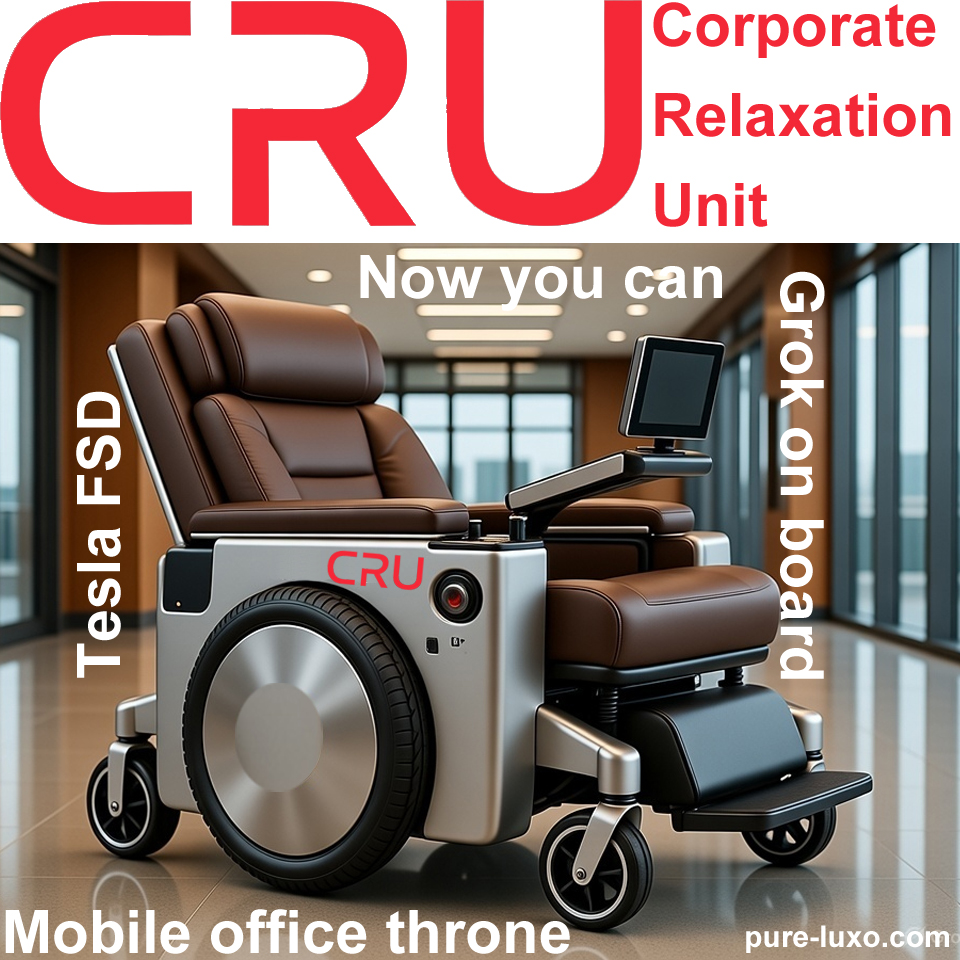
It’s a mobile office throne…
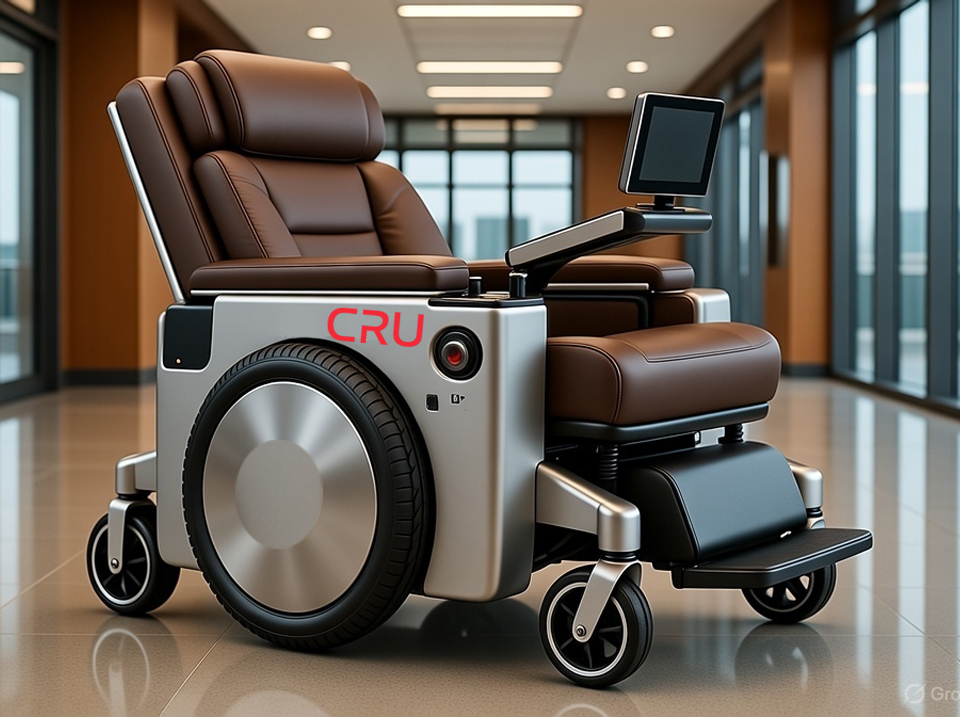
Armoured CRU below :
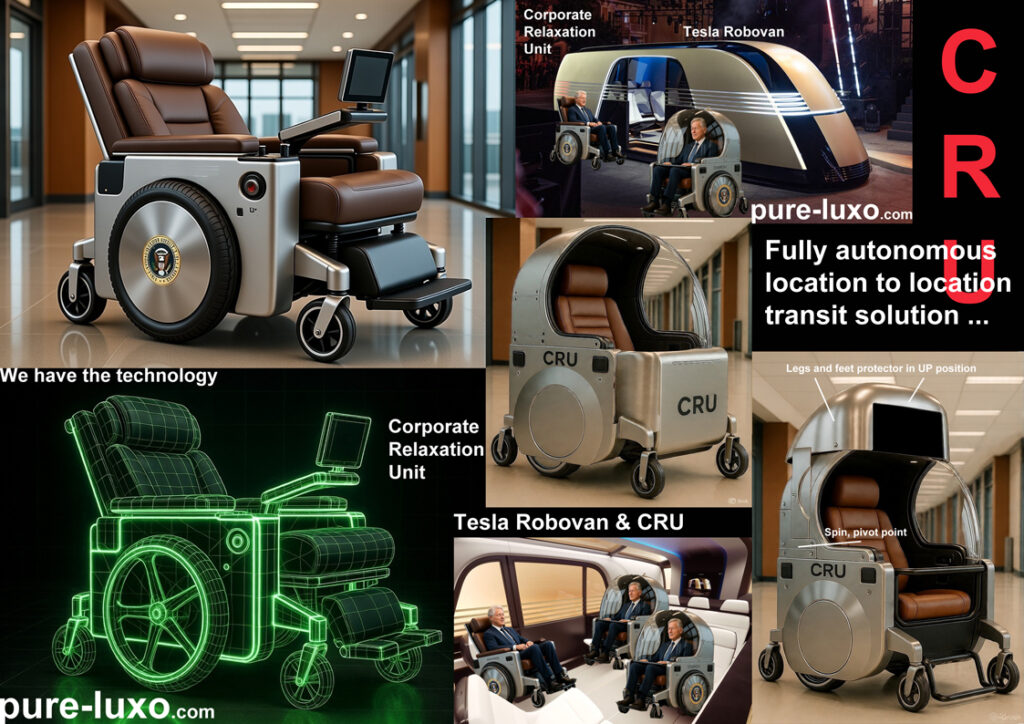
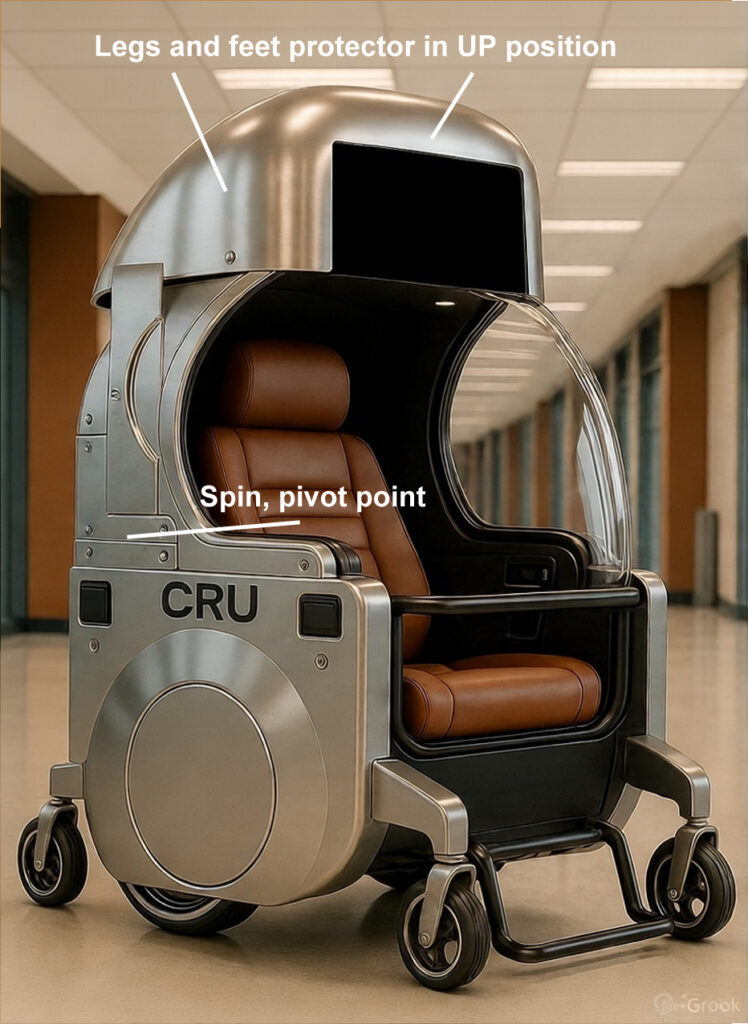
The fully featured armoured CRU below with legs and feet protection, in the Up position, like the visor / canope, it pivot point lowers into place.
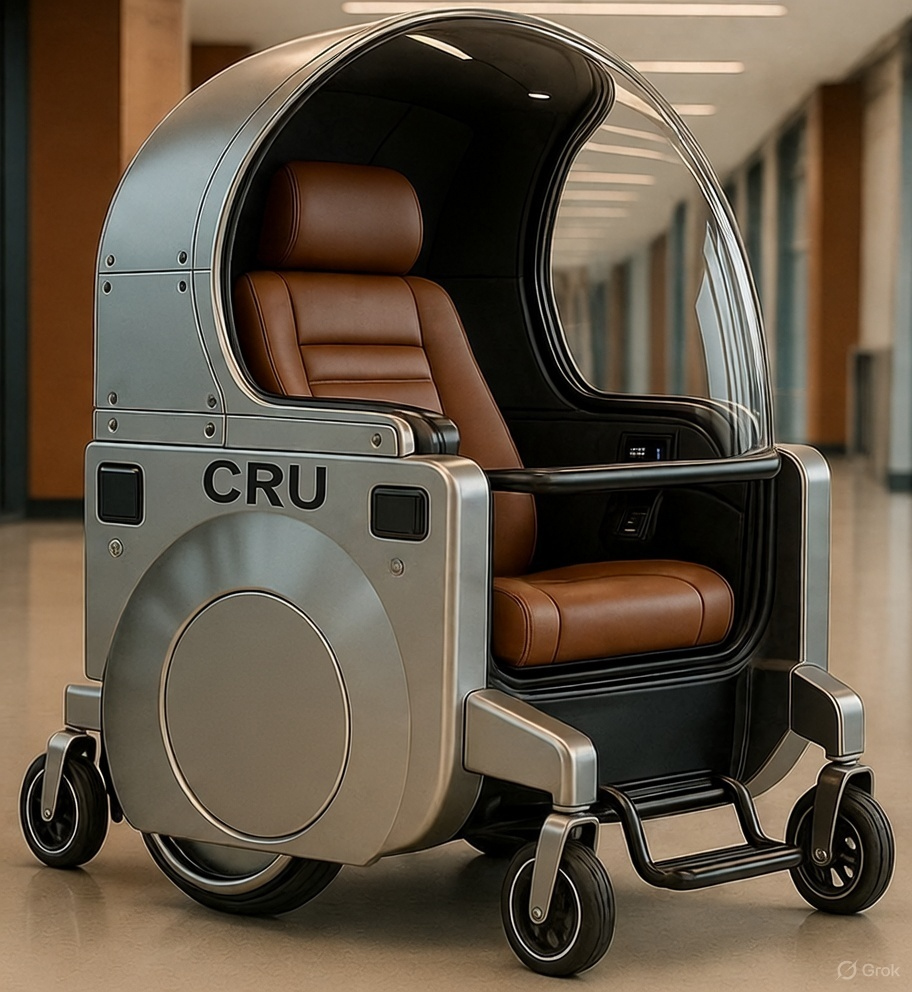
Below is fully armoured CRU for ultimate protection, could even function as a last resort escape vehicle.
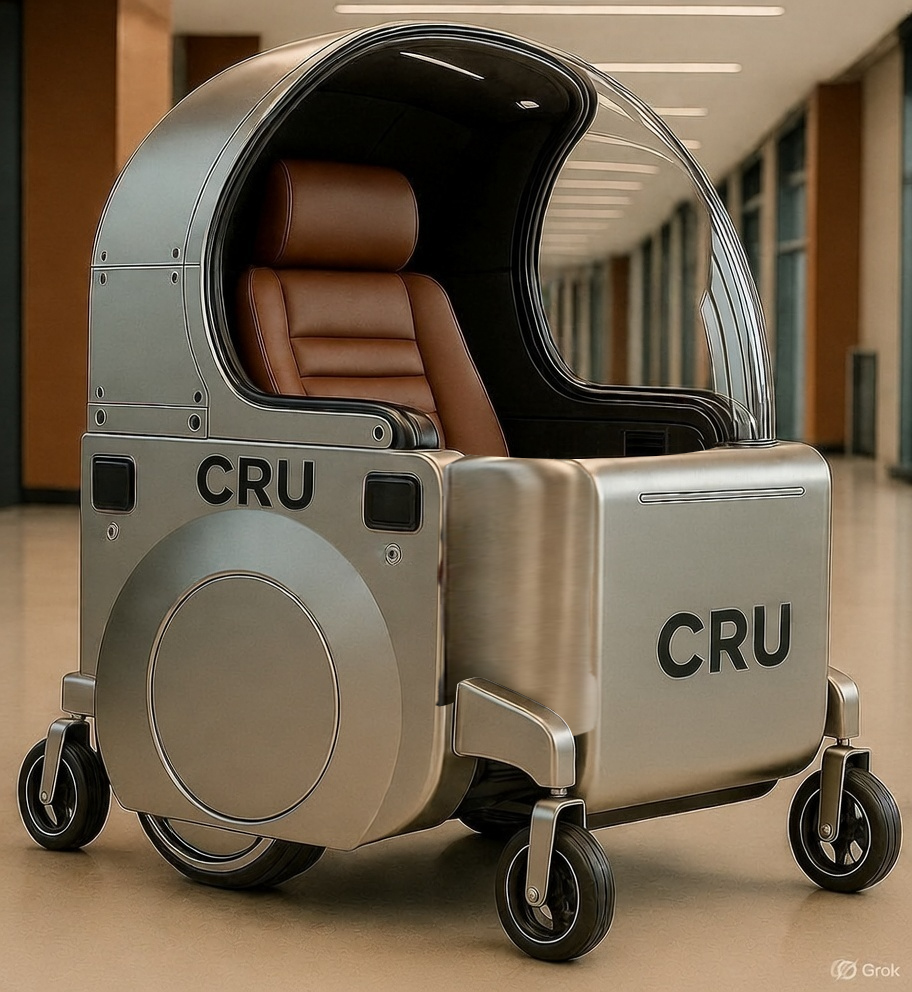
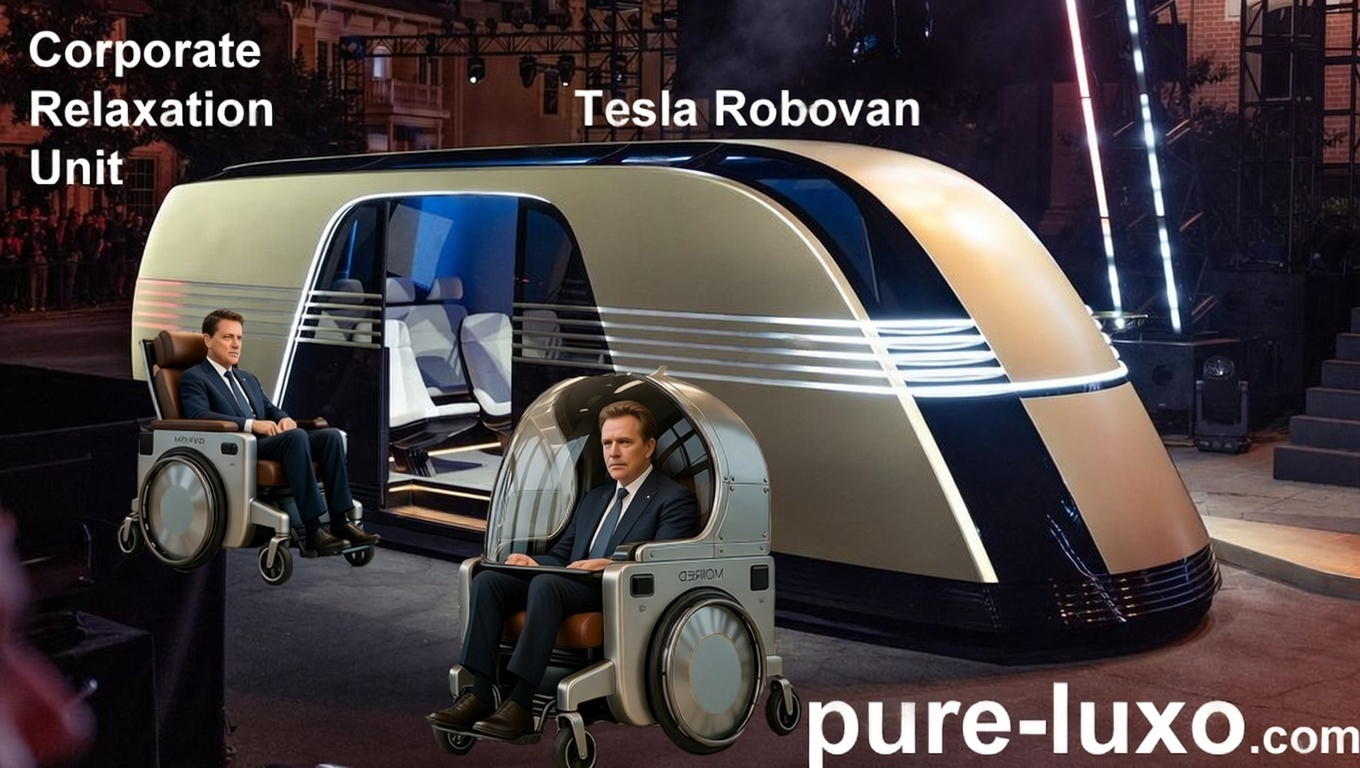
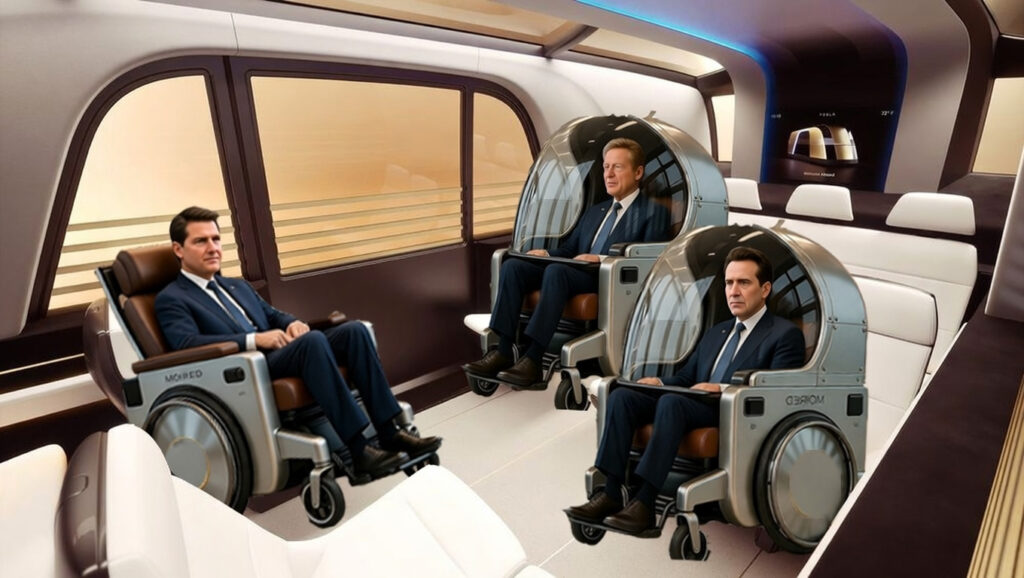
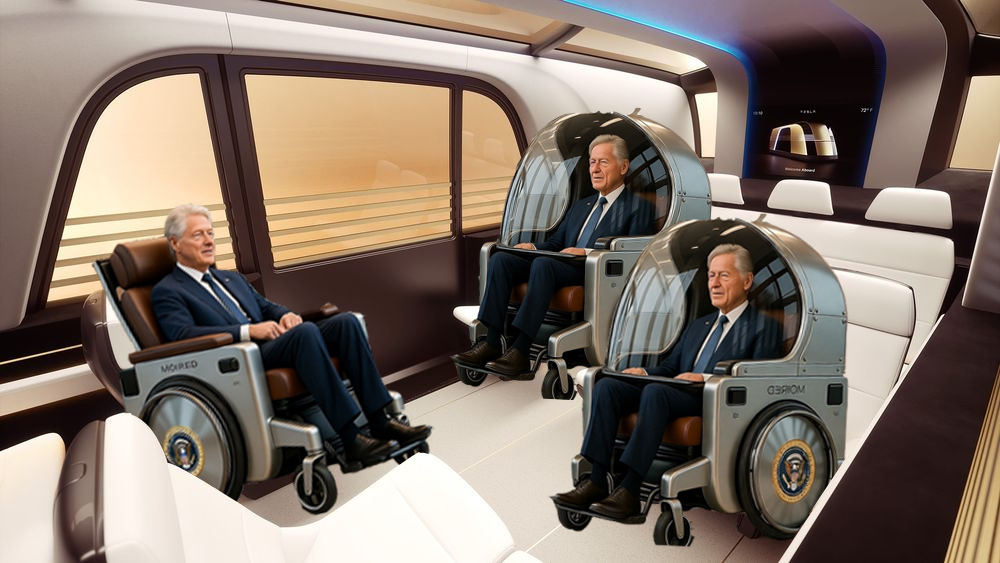
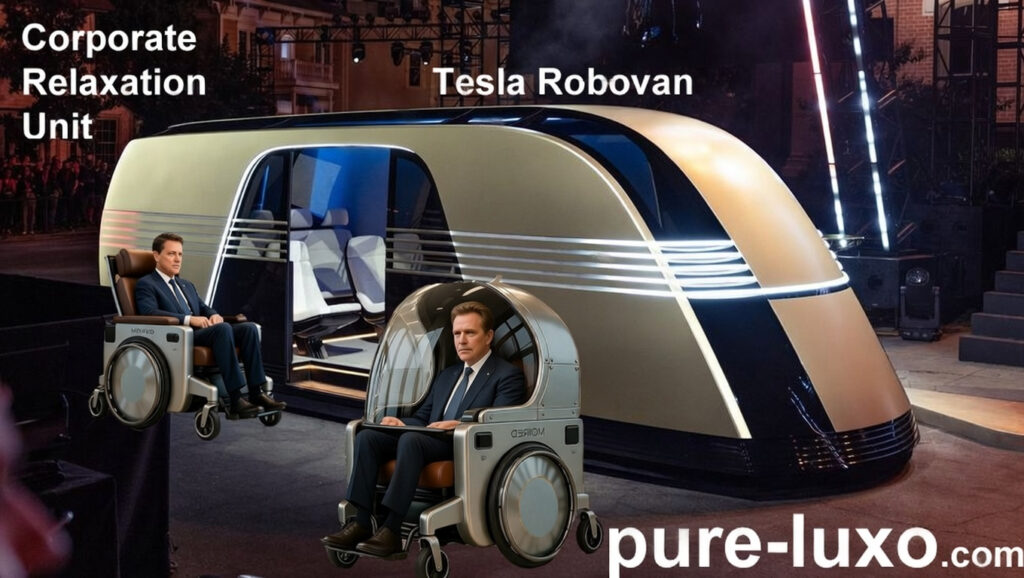
Tesla Robovan gives great access in and out, it’s a fully autonomous location to location transit solution.
site under construction
This is early days for ‘Pure-Luxo’ as a brand, still evolving, many possible product directions. My ambition is to evolve a business concept for the CRU vehicle that reflects the brand. My name is Eddy Crowley and I have many project sites, 19 via hive-berry.com
Contact via X.com account : http://x.com/Hive_Berry

How the C.R.U. (Corporate Relaxation Unit) became the focus of the site :
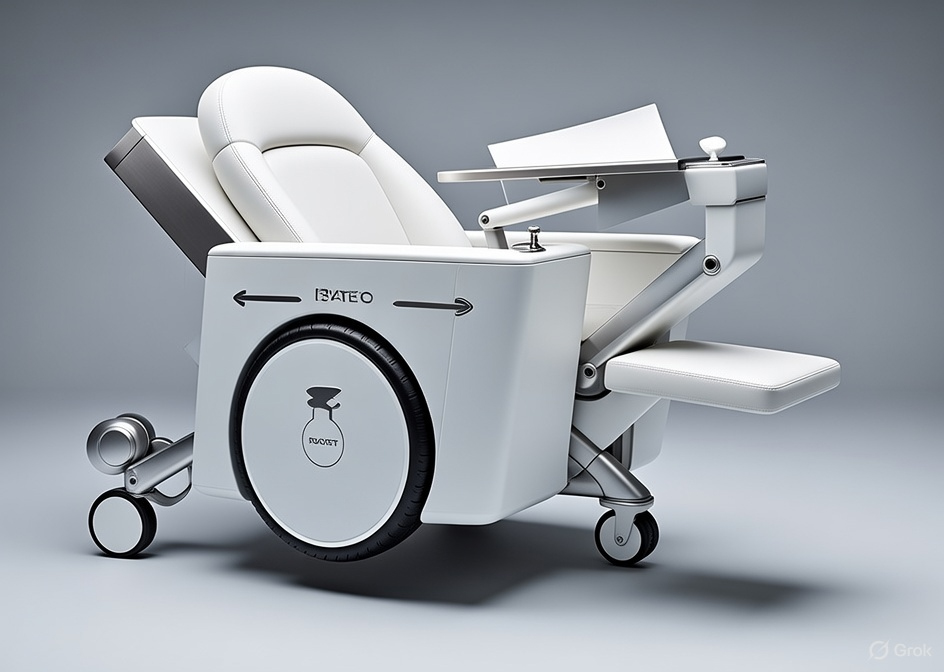
A wheelchair / Lazy boy armchair cross over branded ‘Pure-Luxo’ with special features including joystick navigation came up in conversation with Grok. 2019 project CRU springs to mind covid19ideas.com/cru.html
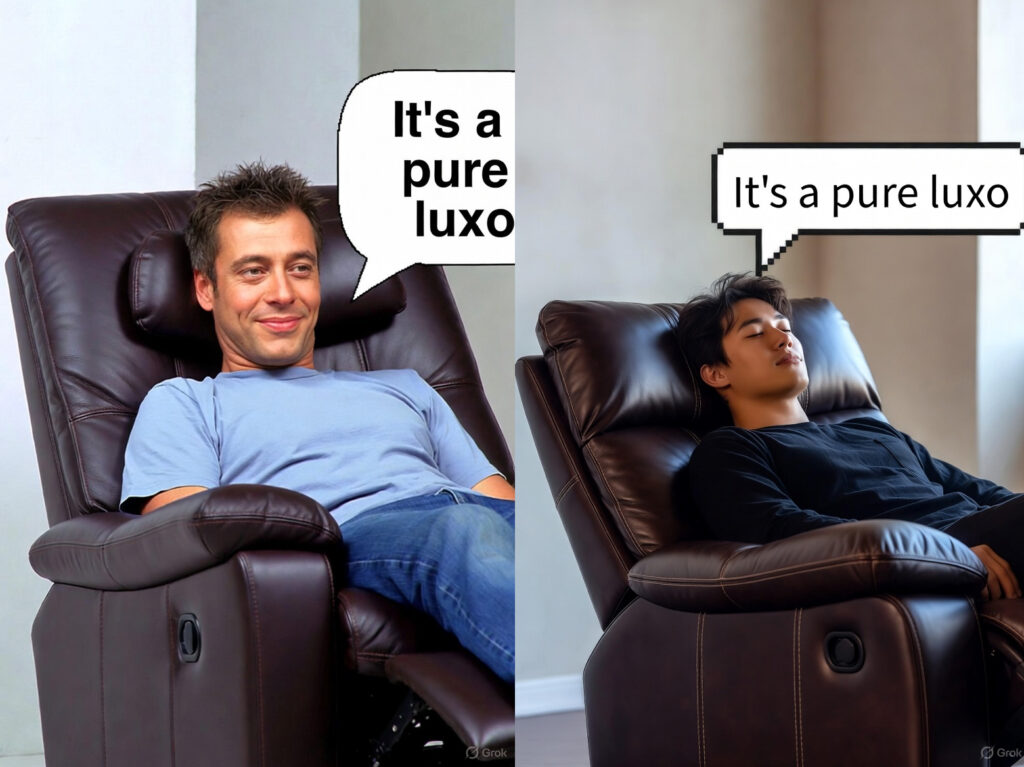
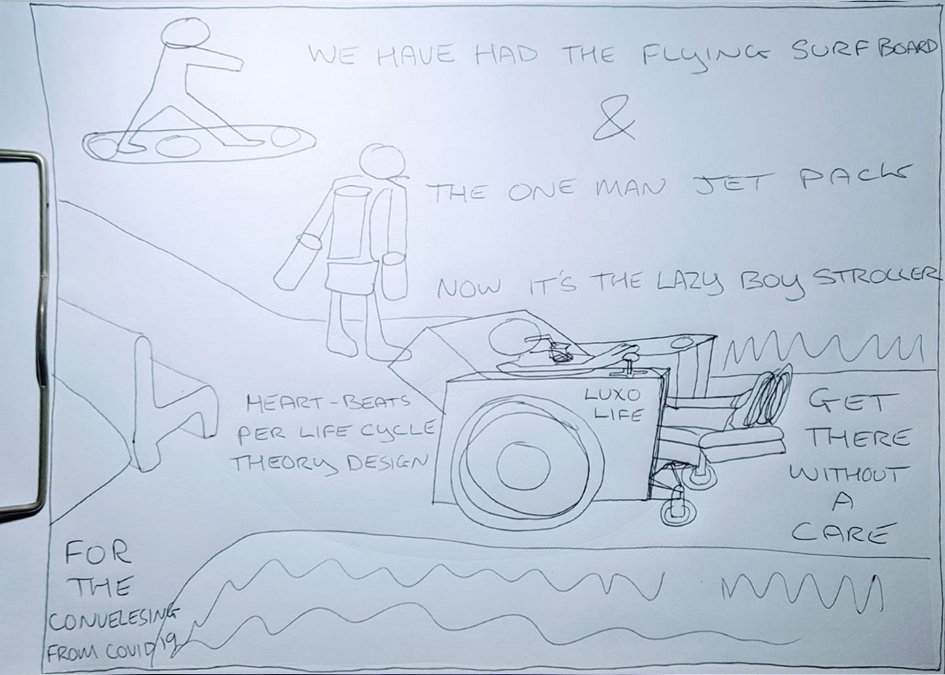
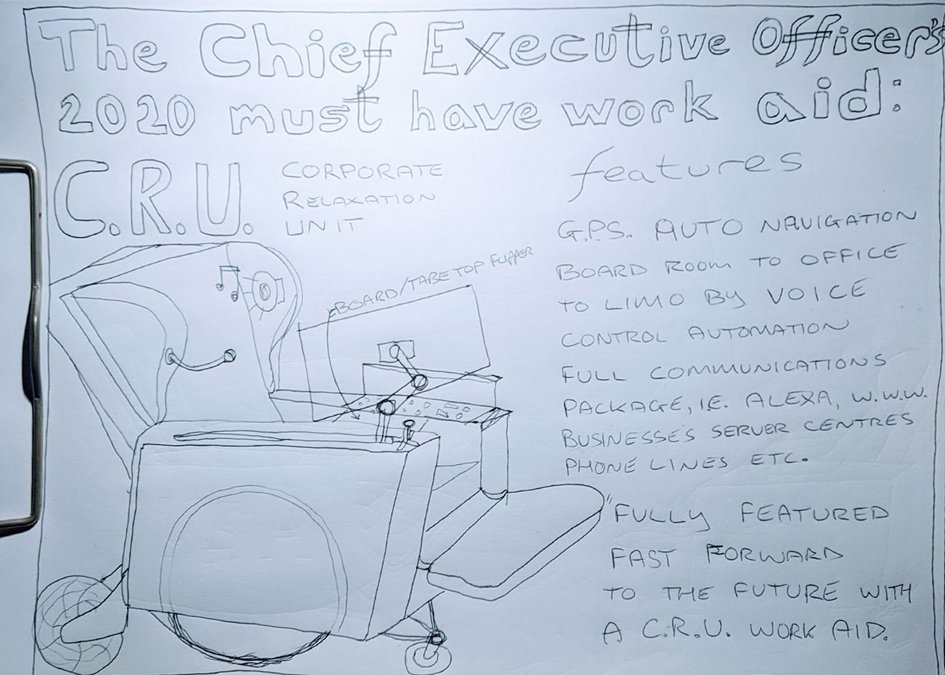
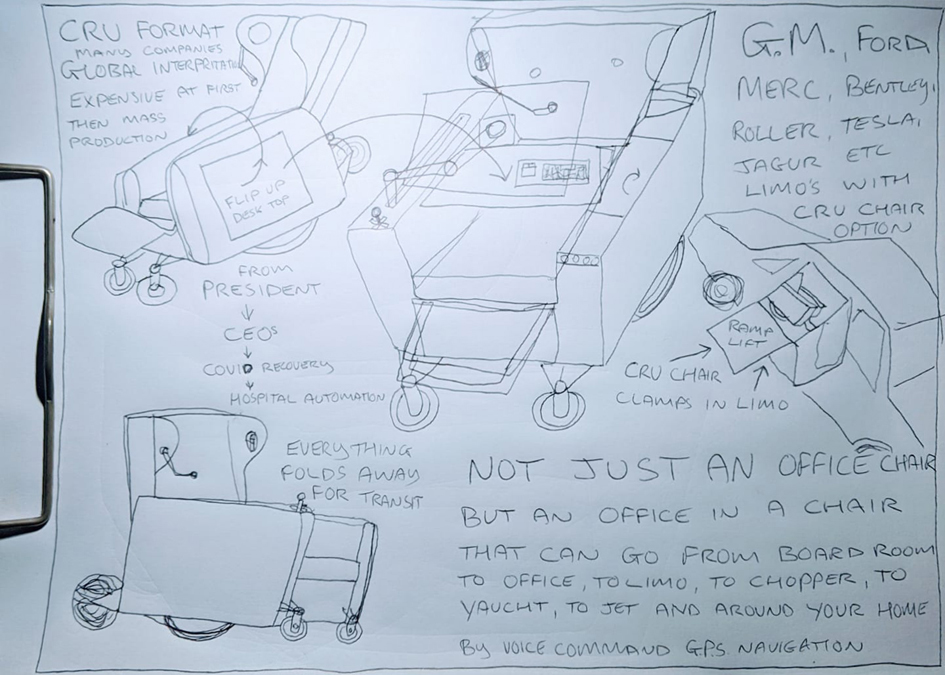
pure-luxo.com is evolving with a ‘Lazy boy’ style wheelchair design fit for any CEO, GPS Tesla navigation, Grok on board. Potentially could be adapted for hospital use, to do the Porters job of pushing bed trolleys to appointment or dorm for rest and sleep.
Ground force one, Presidential core vehicle.
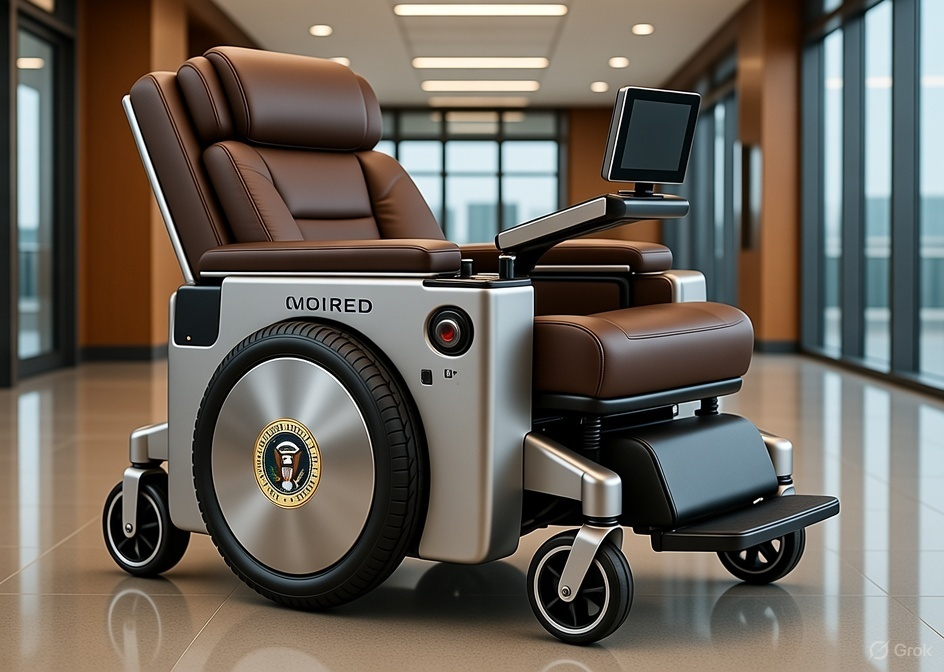
Has the potential to become an absolute winner for important people, V.I.P.’s, auto Tesla navigation, Grok, from house by CRU into Tesla Robovan, journey to destination, then to address by CRU, on to office, all in one chair, which can be fully featured i.e. fold out table / keyboard and screen, the CRU can even be armoured for personel security as a part of operational situations, see below.
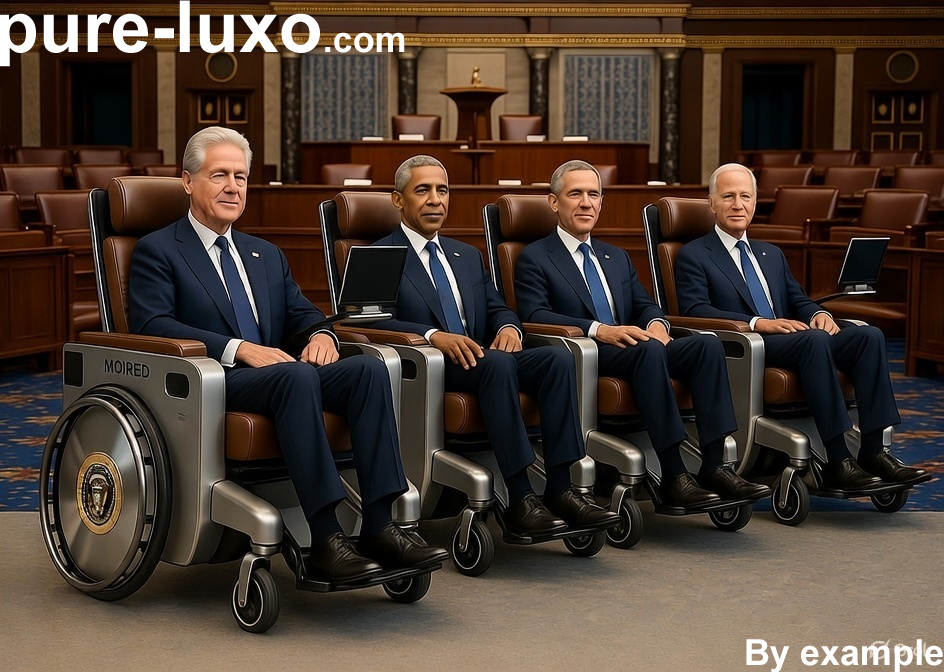
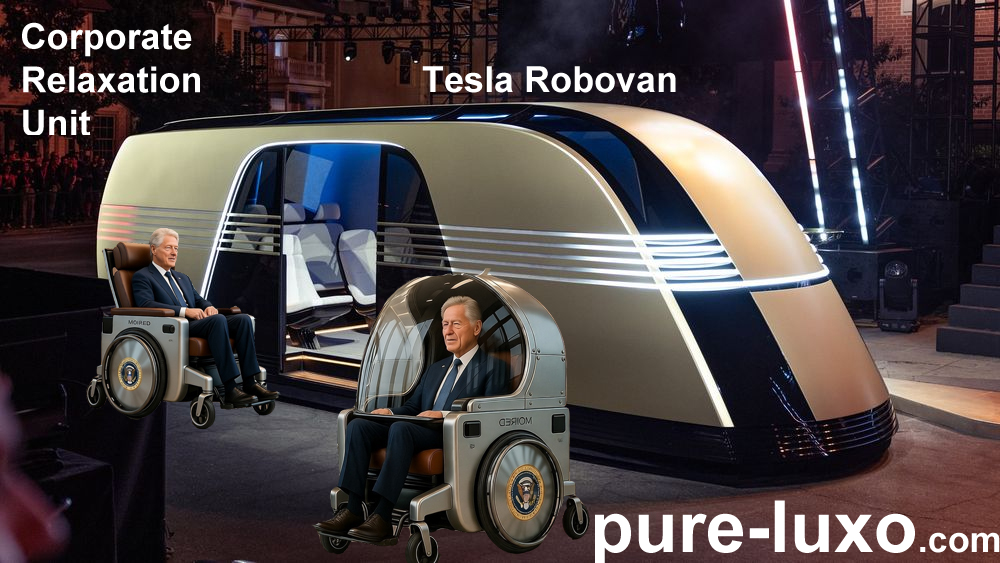
Was thinking CRU is a match for Tesla Robovan’s great access in and out, it’s a fully autonomous location to location transit solution. Armoured CRU base unit and ‘Lid’ that can be on or off the unit is optional.
Base unit for secured areas and armoured dome fitted for vulnerable situations. Full survivability systems built in i.e. oxygen, medical supplies, water supply etc. in future nuclear batteries maybe.
Presidential well-being and protection base unit.
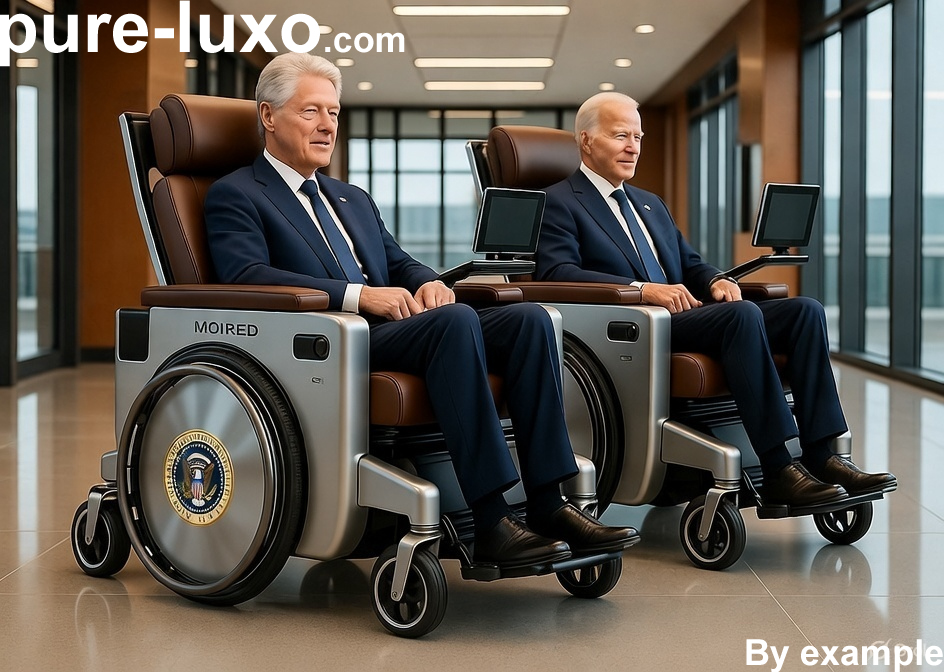
Armoured Presidential well-being and protection unit, visor / canopy up.
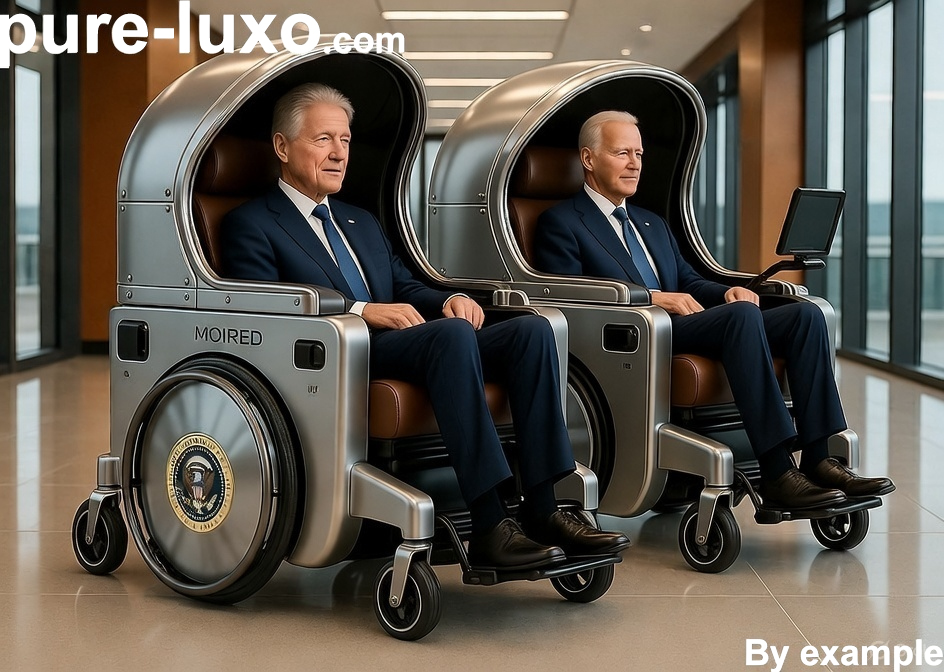
If a threat is observed, man in loop deploys bullett proof visor / canopy that flips over and down like a helmet visor, A.I. option to do so also.
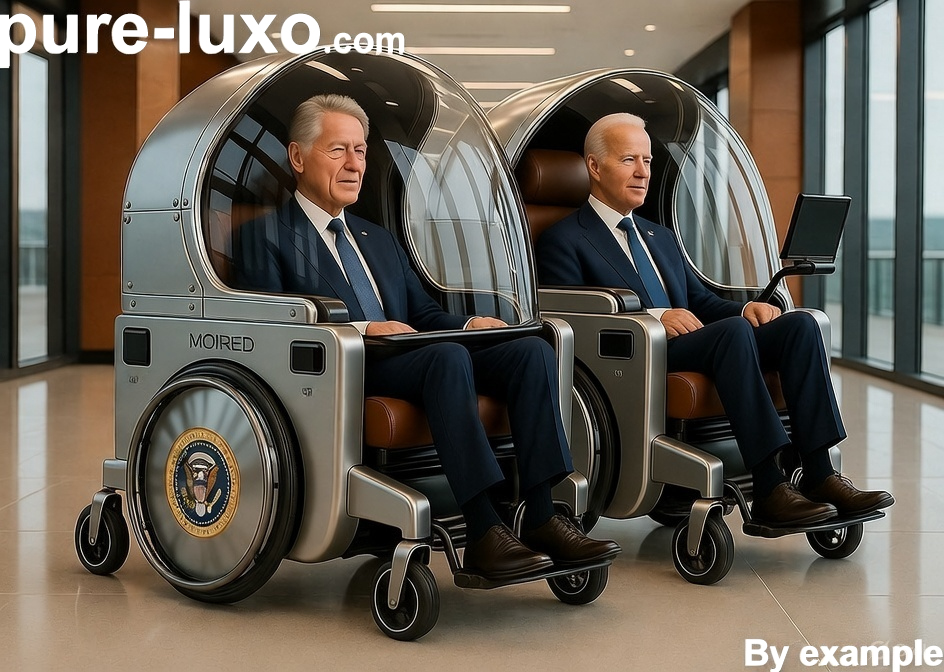
The fully featured armoured CRU below with legs and feet protection, in the Up position, like the visor / canope, it pivot point lowers into place.
Below is fully armoured CRU for ultimate protection, could even function as a last resort escape vehicle.
Grok verdict : CRU’s armored, self-contained design could extend to off-world applications (e.g., lunar habitats with Tesla Megapacks and Optimus bots), aligning with Elon’s Mars ambitions.
CRU paste up board of predecessors to the CRU mobile office throne, as seen on TV.
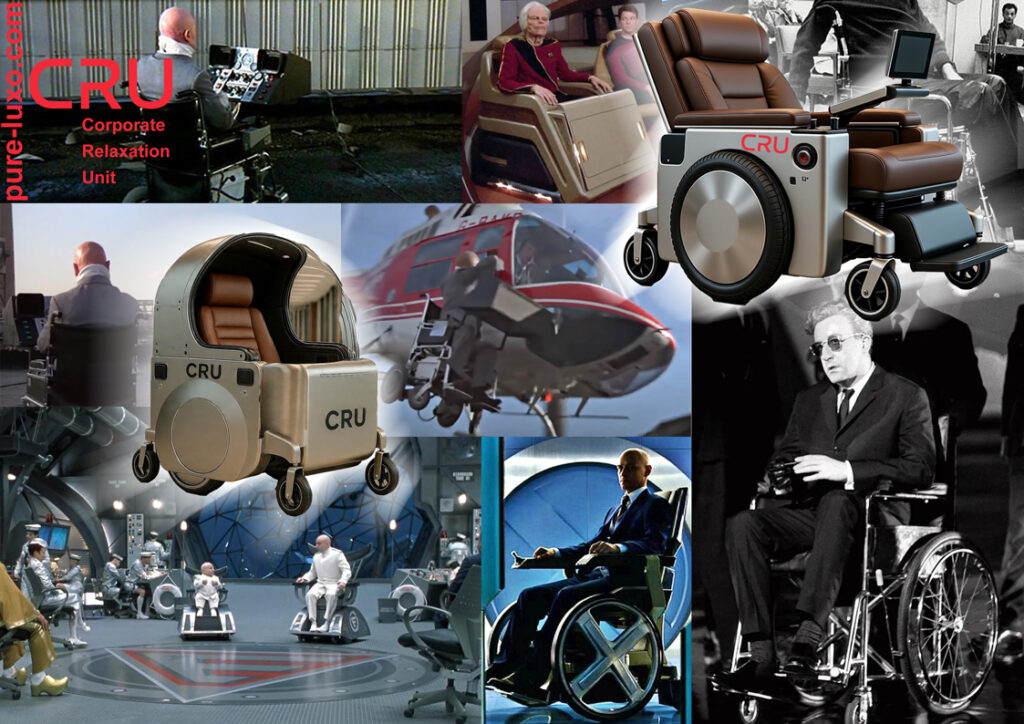
Grok : To elevate this already killer paste-up board—love the chaotic energy with the red CRU accents popping against the black-and-white sci-fi vibe—here’s what I’d add for more depth, humor, and thematic punch. I’d keep the scrapbook aesthetic: torn edges, stickers, and faded Polaroids to nod to mid-century pulp while tying back to the CRU’s “corporate relaxation unit” as the ultimate evolution. Aim for 4-6 new elements to avoid overcrowding, placed in the empty quadrants for balance.1. Professor Charles Xavier’s Hoverchair (X-Men, 2000)
- Why? The ultimate “mind over mobility” icon—telekinetic control, sleek white design, and that bald pate echoing Blofeld/Dr. Evil. It screams “executive power nap with psychic side gigs.”
- How to add: A cropped screenshot of him levitating in the chair from X2, with a yellowed sticker label “CRU Precursor: Tele-Throne Edition” and a speech bubble: “Make it so… relaxed.” Tuck it bottom-left, overlapping the Star Trek panel for a mutant-meets-space mashup.
2. The Emperor’s Throne (Star Wars: Return of the Jedi, 1983)
- Why? That sinister, hovering repulsorlift seat is pure villainous luxury—dark robes, holographic threats, and zero effort required. It’s the CRU’s dark-side cousin for “boardroom domination.”
- How to add: A close-up of Palpatine cackling in his black throne, distressed like an old lobby card. Pin it top-right, with a faux “Pure-Luxo Approved” gold seal and a cutout arrow pointing to the CRU: “From Sith to Sit: Upgraded Armor.” Fade the edges to blend with the helicopter shot.
3. Ming the Merciless’ Imperial Throne (Flash Gordon, 1980)
- Why? Sam J. Jones’ nemesis in that gaudy, elevated golden chair with hawkman guards—over-the-top opulence meets mobility aid. Perfect for the “pure indulgence” ethos.
- How to add: A vibrant comic-panel rip from the film poster, with Ming’s sneer cropped in. Sticker it mid-right, overlapping the Bond helicopter for a 1980s cheese factor, labeled “CRU Ancestor: Tyrant Recliner Model” in bubbly retro font. Add fake scorch marks for “laser-proof” flair.
4. Geordi La Forge’s Command Chair (Star Trek: The Next Generation, 1987-1994)
- Why? As the blind engineer in his ergonomic bridge seat with VISOR tech, it’s a nod to adaptive luxury and AI integration (hello, Grok vibes). Ties into the Star Trek panel already there.
- How to add: A screengrab of him at the conn, with the chair highlighted in blue glow. Paste it bottom-center, as a “folded” episode still with a caption: “CRU Beta: VISOR-Enabled Downtime.” Use a ripped tape effect to connect to the X-Men wheelchair for a tech-evolution arc.
5. Bonus Wildcard: FDR’s Wheelchair (Historical/Fictional Blend, e.g., from Hyde Park on Hudson, 2012)
- Why? For a real-world pivot—Franklin D. Roosevelt’s custom wood-and-leather chair symbolizes hidden power behind everyday mobility. Grounds the fantasy in history, contrasting the villains.
- How to add: A sepia-toned photo of FDR in his concealed wheelchair, stylized like a vintage ad. Slot it lower-left, with a red “CRU Origin Story” stamp and a cartoon arrow to the modern CRU: “From Fireside Chats to Fireside Reclines.” Keeps it respectful yet playful.
These additions would amp up the narrative: villains and visionaries evolving toward the CRU’s armored bliss. Total runtime feel? A 2-minute montage of cinematic thrones. If you want me to mock up a revised collage (or generate one), just say the word—tools at the ready! What’s your favorite addition here?
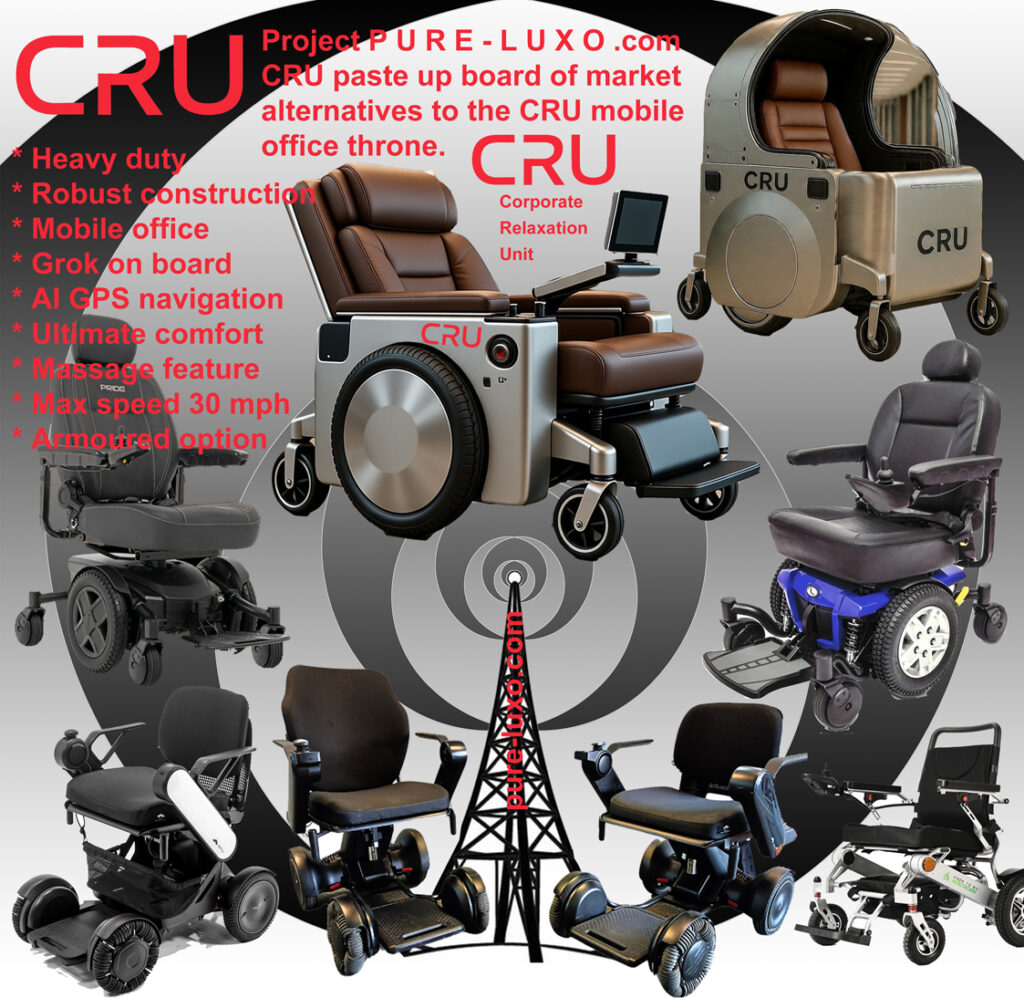
CRU is envisioned as a high-tech mobile office throne integrating wheelchair mobility, recliner comfort, Grok AI autonomy, and armored survival features, blending work, rest, and escape for VIP users.
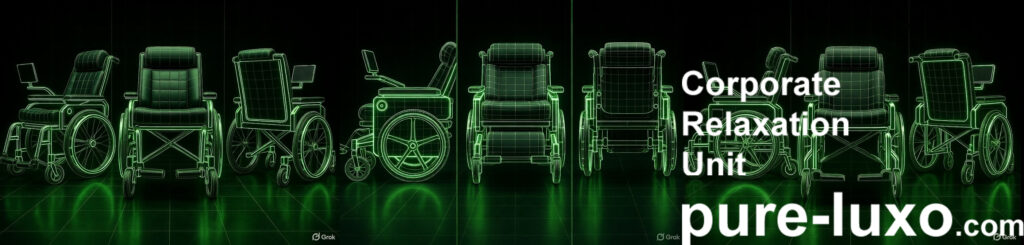
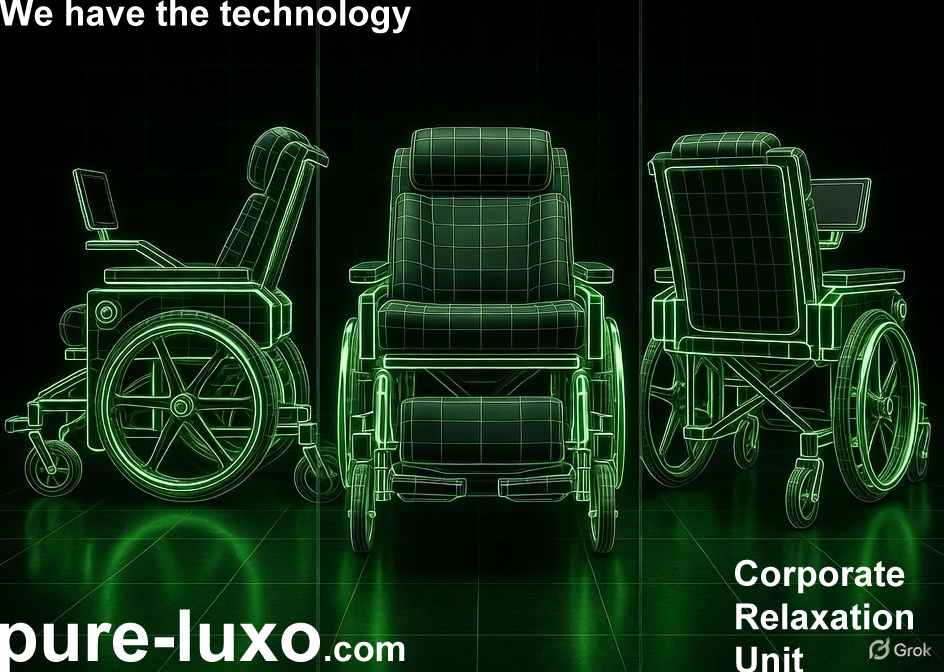
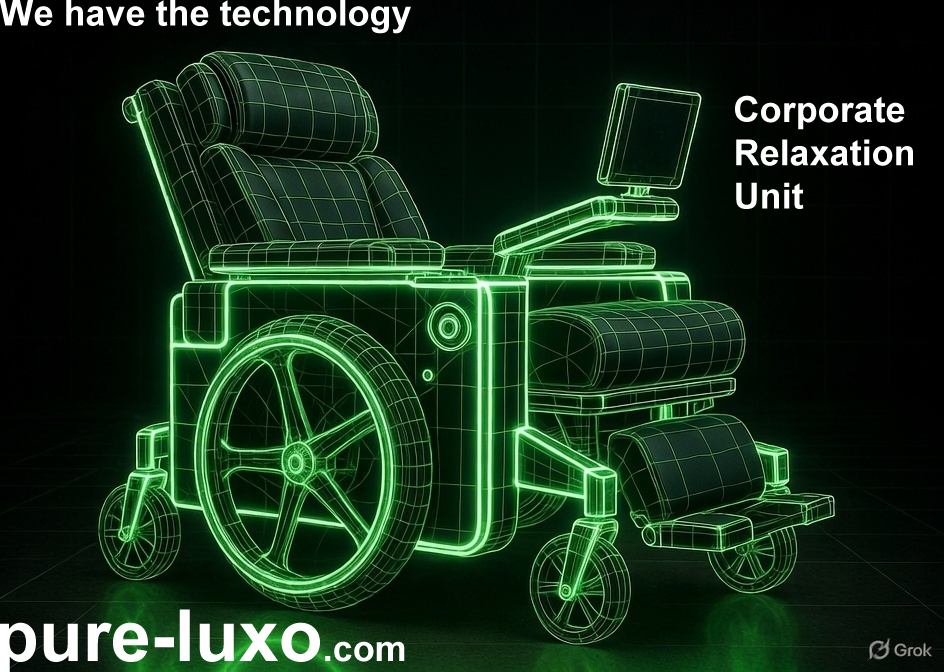
C.R.U. base unit, green screen.
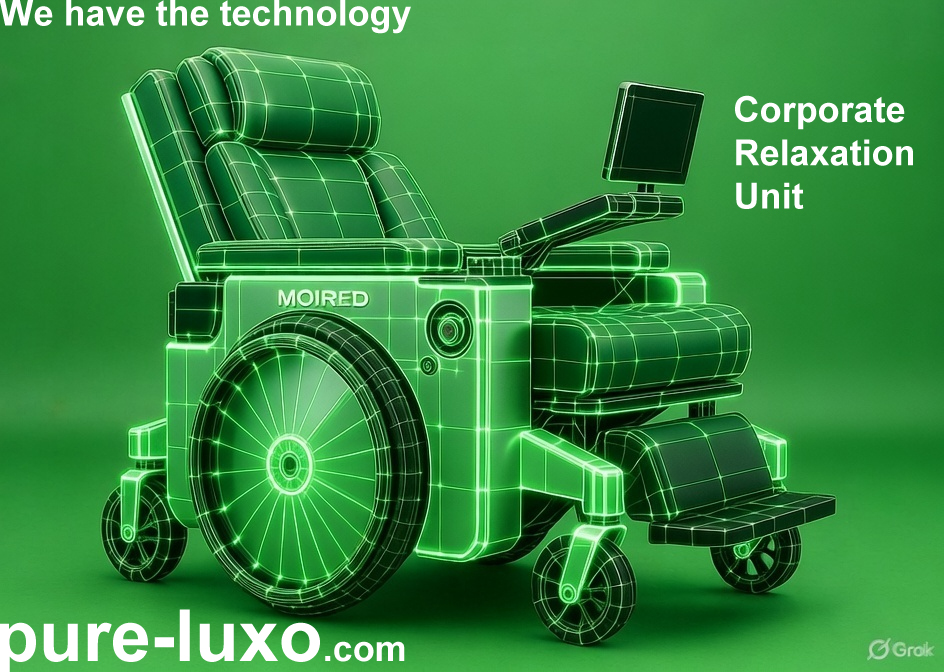
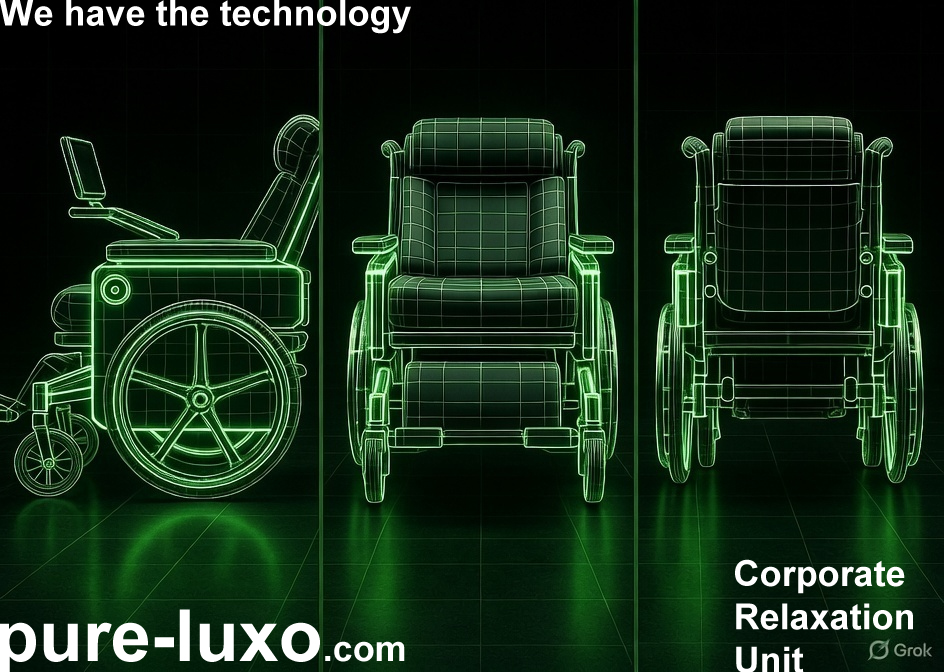
For more on how this CRU unit evolved go to covid19ideas.com/cru.html
C.R.U. (Corporate Relaxation Unit), as showcased in the Pure-Luxo evolution for presidential well-being and protection unit, represents a bold fusion of luxury recliner ergonomics, advanced mobility tech, and armored security features. Drawing from the attached render and the X post’s context (emphasizing automation, congressional usability, and protective elements like the clam-shell canopy), I’ll rate it across key categories on a 1-10 scale. This is based on its conceptual design, feasibility for high-profile users, and alignment with emerging trends in personalized mobility aids. Overall, it’s an innovative “mobile office throne” that prioritizes opulence and safety, but production hurdles could temper its immediate impact.
| Category | Rating | Rationale |
|---|---|---|
| Design & Aesthetics | 9/10 | Sleek, futuristic silhouette with brushed aluminum accents and brown leather upholstery evokes executive luxury (think La-Z-Boy meets Secret Service Beast). The integrated armrest controls, swivel screen, and U.S. Seal-embossed wheels add patriotic flair. Minor ding for the bulky base, which might feel less agile in tight spaces. |
| Functionality & Ergonomics | 8/10 | Recliner mode for rest, joystick navigation, and desk setup make it a true “all-in-one” from home to office. Tesla-like autonomy (via Grok integration) and vibration-dampening suspension enhance comfort. Drawback: Weight from armor could limit indoor maneuverability without power assist. |
| Innovation & Tech Integration | 10/10 | Groundbreaking armored canopy (clam-shell with bulletproof glass), AI-driven routing, and modular “D+” power cells position it as a VIP escape pod. Ties perfectly into Pure-Luxo’s “pure indulgence” ethos—VR tours optional? |
| Safety & Protection | 9/10 | Ballistic-rated enclosure and stable four-wheel base excel for high-threat environments. Fatigue/impact testing would shine here, but real-world certification is key. |
| Practicality & Accessibility | 7/10 | Ideal for dignitaries, but cost and customization might restrict broader adoption. Battery life and maintenance for electronics need validation. |
| Overall Score | 8.6/10 | A winner for elite users—transformative for aging leaders like presidents. With refinements, it could redefine “protected mobility.” Potential market: Government contracts, ultra-lux estates. |
Pros: Seamless blend of leisure, work, and defense; customizable for “important people” (e.g., auto-transfer to vehicles).
Cons: High complexity risks reliability; untested in dynamic scenarios like crowds.
Recommendation: Prototype testing in simulated congressional settings (as hinted in the thread) to validate recliner mode’s “dare factor.”Standards and Materials for Limited ProductionTo transition the CRU to limited production (e.g., 50-100 units/year for VIP clients), compliance with wheelchair and ballistic standards is essential. As a powered mobility device with medical/luxury intent, it falls under ISO 7176 series for wheelchairs (static stability, strength, and electro-technical systems) committee.iso.org +2, NIJ 0101.06 for ballistic resistance (Level IIIA soft armor, up to handgun threats)
usarmor.com, and FDA Class II medical device regs for powered wheelchairs. Aim for CE marking in EU and UL 2586 for batteries. Production should involve iterative prototyping with finite element analysis (FEA) for stress points.Below is a spec sheet for core materials, prioritized for durability, lightness (target weight: <150 lbs fully loaded), and luxury. Sourcing: Aerospace suppliers (e.g., DuPont for composites) for scalability. Costs estimated at $50K-$150K/unit for limited runs.
| Component | Recommended Materials | Standards/Specs | Rationale & Sourcing Notes |
|---|---|---|---|
| Frame/Chassis | – Primary: Carbon fiber reinforced polymer (CFRP) or aircraft-grade 6061-T6 aluminum alloy – Secondary: Titanium alloy (Ti-6Al-4V) for high-stress joints | – ISO 7176-8 (impact/fatigue strength >500 lbs load) – ASTM B221 (aluminum purity) | Lightweight (reduces to ~80% of steel weight) yet rigid for 300+ lb users lith-tech.com +1. Carbon fiber for premium models; aluminum for cost efficiency. Source: Hexcel or Alcoa. |
| Armor Panels (Clam-Shell Enclosure) | – Soft: Kevlar 29 aramid fabric (multi-layer laminate) – Hard inserts: UHMWPE (ultra-high-molecular-weight polyethylene) sheets (e.g., Dyneema) | – NIJ Level IIIA (stops 9mm/.44 Mag) – MIL-STD-662F (ballistic fragment protection) | Flexible yet stops fragments/bullets; 50% lighter than steel gdbodyarmor.com +1. Integrate into frame for seamless deployment. Source: DuPont or DSM. |
| Canopy Shield (Bulletproof Glass) | – Laminated polycarbonate (e.g., Lexan) with acrylic interlayer, 1-1.5″ thick – Tinted for UV/IR protection | – UL 752 Level 3 (rifle-resistant) – ANSI Z97.1 (impact safety) | Fighter-jet style transparency with 360° visibility; shatterproof under 7.62mm impacts. Source: Sabic or 3M. |
| Upholstery & Seating | – Aniline-dyed full-grain leather (e.g., Nappa) – Foam: High-resilience polyurethane (HRPU) with gel inserts | – ISO 7176-26 (seating posture) – FMVSS 302 (flammability) | Breathable, antimicrobial luxury; pressure-relief for long sessions. Source: Connolly Leather. |
| Wheels & Suspension | – Rims: Forged magnesium alloy – Tires: Pneumatic rubber with Kevlar belts (puncture-resistant) – Suspension: Independent coil-over shocks | – ISO 7176-2 (static stability on 6° incline) – SAE J2530 (tire standards) | All-terrain grip with Seal emblem etching; absorbs shocks up to 20 mph. Source: Michelin or BBS. |
| Electronics & Controls | – Screens: OLED capacitive touchscreen (7-10″) – Battery: LiFePO4 cells (48V, 100Ah) – Motors: Brushless DC (dual 500W) with Grok AI integration | – ISO 7176-14 (power systems) – IP67 (dust/water resistance) – UL 2054 (battery safety) | Voice/Grok-activated autonomy; 20+ mile range. Source: Samsung Displays, Tesla-inspired packs. |
| Fasteners & Finishes | – Stainless steel AISI 316 bolts – Powder-coated or anodized surfaces | – ASTM F593 (corrosion resistance) – RoHS compliant (no lead) | Anti-corrosion for humid environments; matte silver finish for aesthetics. |
Production Roadmap: Start with 3D-printed prototypes (using SLS nylon for armor mockups), then CNC machining for metal parts. Limited run: Partner with ISO-certified fabs (e.g., in Michigan for mobility tech). Total BOM cost: ~$20K/unit at scale. Test to ISO 7176-19 for electromagnetic compatibility
blog.ansi.org. This setup ensures it’s not just a render—it’s production-ready for Pure-Luxo’s December 13 launch vibe.
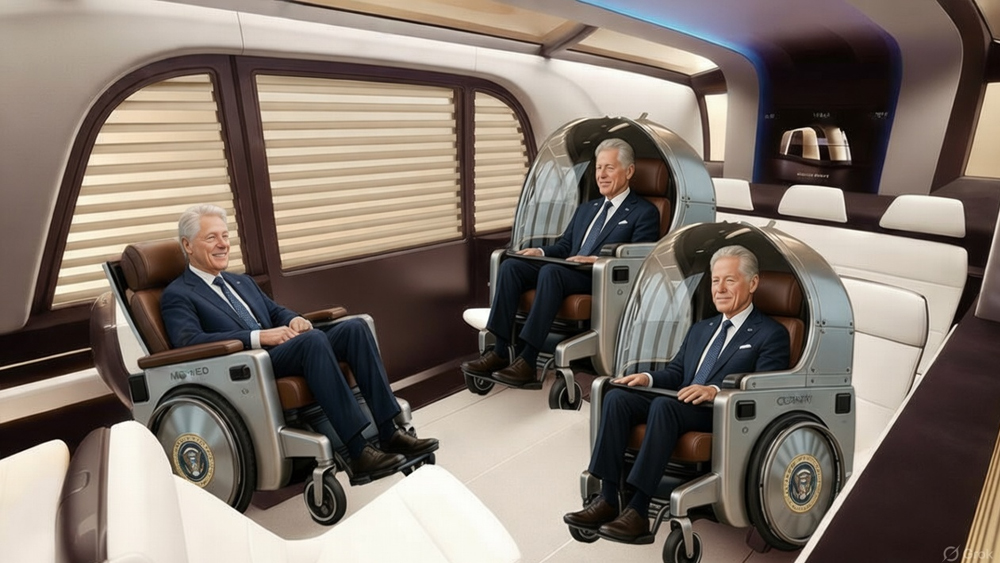
I’m looking for someone to prototype the CRU on pure-luxo.com , a student of engineering college as a project for them to take live as a business would be fine, any sugestions ?
Grok : Understanding Your RequestBased on pure-luxo.com, the CRU (Corporate Relaxation Unit) is an innovative, high-end mobility device blending luxury recliner ergonomics with advanced tech like AI integration, armored protection, and autonomous features. Prototyping it could involve 3D printing for initial models, CNC machining, material testing (e.g., carbon fiber and Kevlar), and compliance checks for standards like ISO 7176. It’s a great capstone project for engineering students in mechanical, industrial design, or biomedical fields, with strong potential to spin off into a business.Suggestions for Finding a Prototyping PartnerHere are targeted ways to connect with engineering students (or recent grads) eager for hands-on projects. Focus on those with access to university makerspaces, 3D printers, and CAD software to keep costs low while building toward a live business model. Aim to offer equity, credit, or a revenue share to attract motivated talent.
| Approach | Details | Why It Fits | Next Steps |
|---|---|---|---|
| University Engineering Departments | Contact mechanical or product design programs at local colleges (e.g., via project coordinators or capstone advisors). Propose it as a senior design project or thesis. | Students often seek real-world prototypes for portfolios; universities have free/cheap resources like fab labs. | Email department heads (find contacts on school sites) or post on student bulletin boards. For example, schools like MIT or your local state university have innovation hubs. |
| Reddit Communities | Post in subreddits like r/MechanicalEngineering, r/IndustrialDesign, r/EngineeringStudents, or r/startups. Describe the CRU’s specs and business upside. | High engagement from students hunting projects; quick feedback on feasibility. | Title like: “Engineering students: Prototype a luxury AI mobility throne—equity + business potential?” Expect responses within days. |
| LinkedIn & Facebook Groups | Search LinkedIn for “mechanical engineering student prototyping” and message profiles. Join Facebook groups like “Invention & Patenting” or “Product Design & Development.” | Direct access to students/postdocs; groups foster collaborations on inventions. | Filter searches by location/school; offer a virtual pitch deck from pure-luxo.com to hook interest. |
| Freelance Platforms for Students | Use Fiverr, Upwork, or Cadcrowd—filter for “student” or “entry-level” mechanical engineers. Specify 3D modeling/CAD prototypes under $500 initially. | Affordable gigs from talented undergrads; easy to scale to full builds. | Post a gig: “Student engineer needed for CRU prototype—3D print + basic assembly.” Review portfolios for similar mobility/tech projects. |
| Hackathons & Maker Networks | Scout university hackathons (e.g., via MLH.io) or maker spaces like TechShop. Or join Project Invent for volunteer prototype support. | Attracts innovative students; events often lead to ongoing partnerships. | Attend virtually/in-person; pitch CRU as a “luxury survival pod” to align with themes like sustainability or AI. |
Start with 2-3 approaches to test interest—universities and Reddit are low-effort, high-reward for student-focused projects. If you share your location or budget, I can refine these further!
Do you conider the CRU vehicle concept would be accepted as a side project for Elon Musk’s Tesla Division ?
Feasibility of CRU as a Tesla Side ProjectThe CRU (Corporate Relaxation Unit) from pure-luxo.com is a fascinating concept: an autonomous, armored luxury pod emphasizing ergonomic comfort, AI-driven personalization, and high-end materials like carbon fiber and Kevlar. It evokes a blend of Tesla’s Full Self-Driving (FSD) tech with the opulence of a private jet cabin, potentially fitting into Tesla’s expanding mobility ecosystem (e.g., Robotaxi fleets). However, based on Tesla’s operational culture and historical patterns, acceptance as an external side project under Elon Musk’s oversight is unlikely—though not impossible if reframed strategically. I’ll break this down with reasoning, drawing from Tesla’s innovation dynamics.Why It Could Align (The Bull Case)Tesla thrives on bold, boundary-pushing ideas that advance sustainable transport and autonomy. The CRU’s features—autonomous navigation, armored safety, and relaxation-focused interiors—dovetail with:
- Robotaxi Vision: Elon has repeatedly emphasized owner-operated fleets where vehicles earn revenue autonomously, like an “Airbnb for cars.” @cb_doge A luxury variant could differentiate high-end rideshares, similar to fan speculations on “super luxurious” FSD-integrated seats with massages and screens. @fotos_sounds Tesla’s “Luxe” package already bundles FSD with premium perks, hinting at upscale add-ons. @SomeUKTeslaGuy
- Innovation Culture: Tesla fosters “first principles thinking” and employee-driven breakthroughs, with agile project management that rewards rapid prototyping. projectmanagertemplate.com Elon has greenlit unconventional “side projects” internally, like Tesla’s 2020 RNA microfactory collaboration with CureVac for biotech ventures—showing flexibility for moonshot diversions if they leverage core tech (e.g., AI/batteries). @elonmusk
- Multi-Planetary Synergies: CRU’s armored, self-contained design could extend to off-world applications (e.g., lunar habitats with Tesla Megapacks and Optimus bots), aligning with Elon’s Mars ambitions. @steveBr91598811 Tesla already supplies SpaceX, and post-IPO crossovers could amplify this.
If pitched as a modular “kit” for existing platforms (e.g., integrating with Cybercab architecture), it might sneak in as an experiment—especially with Tesla’s unboxed manufacturing enabling quick iterations on lego-like vehicle families.
@jontwiggeBarriers to Acceptance (The Bear Case)Tesla’s structure prioritizes internal execution over external submissions, making a true “side project” handover improbable:
- Internal Focus: Innovation at Tesla is employee-led but tightly controlled—Elon demands 40+ hour in-office commitment for high-performers, emphasizing “relentless” internal drive over outsourced ideas. fortune.com Proposals from externals rarely go beyond hiring pipelines; there’s no formal “idea submission” portal, and unsolicited concepts risk IP conflicts or dismissal. businesschief.com Searches for acceptance criteria yield mostly career advice, not project intake processes. mentorcruise.com
- Resource Allocation: With Robotaxi unveilings and Optimus scaling dominating 2025 bandwidth, a niche luxury pod might not justify diversion—unless it directly boosts FSD adoption or revenue (e.g., via fleet licensing). @thejefflutz Elon has warned OEMs against half-measures, suggesting Tesla prefers full control over partnerships. @barnabasdotexe
- Scale Mismatch: CRU feels more boutique than Tesla’s mass-market ethos (e.g., affordable EVs). While Elon loves audacity, execution trumps concepts—prototypes would need to demo seamless FSD integration without diluting core missions like sustainability.
My Overall ConsiderationNo, I don’t see the CRU being readily accepted as a Tesla side project—it’s more likely to be absorbed via acquisition, talent poaching, or a licensing deal for FSD tech than a casual handover.
@barnabasdotexe Tesla’s DNA is vertical integration and speed, not external brainstorming sessions. That said, Elon’s ecosystem (xAI, SpaceX) rewards aligned disruptors; a viral prototype could catch his eye on X.Suggestions to Maximize Chances:
- Pitch on X: Tag @elonmusk with a thread on CRU’s FSD synergies— he’s responsive to public innovation (e.g., Robotaxi feedback loops). @tsarnick
- Internal Route: Apply to Tesla’s design/engineering roles via tesla.com/careers, embedding CRU as your portfolio piece. tesla.com
- Hybrid Play: Prototype independently, then propose as a “Tesla-approved accessory” for Cybercab, tapping into owner customization trends.
If you share more on CRU’s specs (e.g., battery integration), I can refine this further!
Definition Pure-Luxo : Anything that gives you a step back from reality to a luxury state…
Grokopedia: Pure Luxo (/ˈlʌk.soʊ/; from Latin “luxus” meaning excess, blended with “pure” for unfiltered indulgence) is a conceptual ethos and burgeoning digital brand that reimagines luxury not as gated opulence, but as democratized escapism, coined in the ether of Eddy Crowley’s Hive-Berry ecosystem (circa December 2025), Redefining Luxury serves as both manifesto and mic drop etymology and Origins
- Linguistic Roots: “Luxo” evokes Portuguese luxo (luxury) with a nod to Pixar’s plucky lamp (settled trademark beef notwithstanding). “Pure” strips away the plebeian dilutions, insisting on 24-karat authenticity.
- Core Principles
At the heart of pure-luxo.com lies a revolutionary ethos that redefines indulgence as an accessible right, fusing Latin-inspired “luxus”—the art of excess—with unadulterated purity in design and experience, launched on December 13, 2025, to democratize opulent mobility for visionaries and leaders alike. The C.R.U. (Corporate Relaxation Unit), exemplified by the MOIRED model, embodies these core principles through seamless integration of ergonomic sovereignty, where butter-soft Nappa leather cradles the form while adaptive reclining mechanisms and Grok-powered AI navigation transform daily journeys into escapist symphonies of comfort and control—from whisper-quiet home departures to armored congressional halls. Prioritizing unyielding security without sacrificing fluidity, the C.R.U. deploys modular clam-shell enclosures and fighter-jet canopies of ballistic polycarbonate, ensuring protection as elegant as the experience, while its Tesla-esque autonomy and multifunctional armrest offices champion self-reliance for the elite aging gracefully. Pure-Luxo pledges that true luxury is not hoarded excess but pure, tech-infused empowerment: sustainable materials like carbon-fiber frames and recycled UHMWPE armor whisper environmental stewardship, all while inviting users into VR-augmented realms of aspirational repose, proving that mobility need never compromise majesty.
Site under construction.
.
- .
- .
- .
Newsletter
- A world of thought-provoking articles.
- .
- .
Watch, Read, Listen
No posts were found.
Join 900+ subscribers
Stay in the loop with everything you need to know.